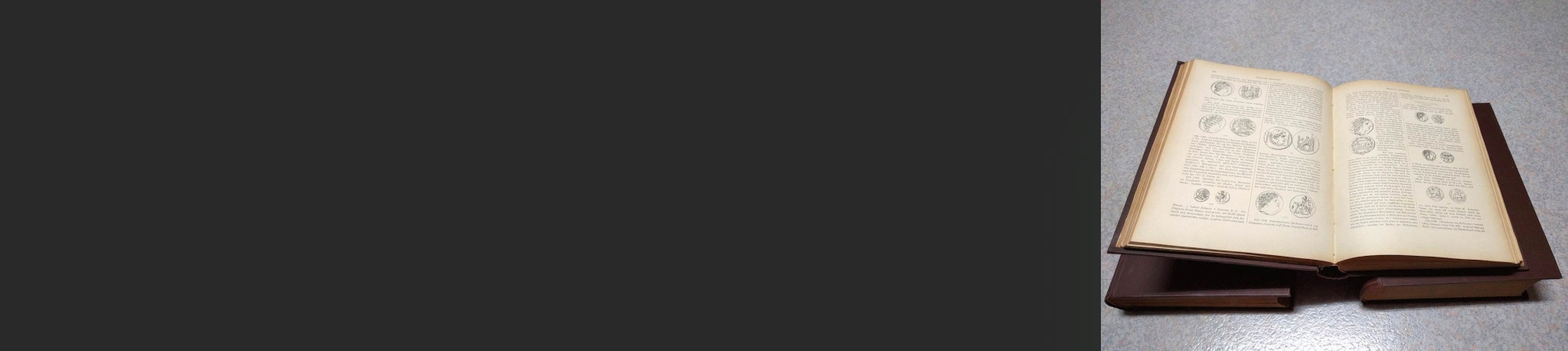
8vo. (XVI),1154,(52 index) p. Calf 20.5 cm (Ref: STCN ppn 840013841; Schweiger 2,766; Dibdin 2,312: ‘Gronovius by the assistance of 6 ancient MSS. and his own sagacious conjectures, has improved the text in many places, and given some ingenious and successful explanations of difficult passages’; Moss 2,461/2; Fabricius/Ernesti 1,21; Neue Pauly, Supplement Band 2, Geschichte der antiken Texte, Darmstadt 2007, p. 477; Graesse 5,329; Ebert 17202) (Details: Gilt back with 5 raised bands. Engraved title. Commentary in 2 columns beneath the text) (Condition: Binding scuffed and scratched. Shield on the back gone. Paper of the front pastdown wrinkled. Titlepage cut out, and mounted on blank flyleaf expertly, with removal of the blank margins. Small hole in blank lower margin of the second leaf. Lower margin of the second half partly and very faintly waterstained) (Note: The 21 surviving comedies of the Roman playwright Titus Maccius Plautus, ca. 254-184 B.C., have never been out of fashion since the publication of the ‘editio princeps’ in 1472. Plautus’ influence on world literature is huge. The comedies feature stock situations and characters from everyday life. ‘Plautine comedy is inventive, exuberant, varied, full of rollicking eavesdropping scenes, lyrical meters, slapstick, and verbal fireworks.’ Early editors, commentators and translators ransacked the plays for rhetorical and moral examples. Ever since the first post-classical performances at the end of the 15th century Plautus never left the stage. The Italian ‘commedia erudita’ and the popular improvisatory ‘commedia dell’arte’ developed through imitations of the Roman New Comedy. Probably best known is Carlo Goldoni’s adaptation of the Menaechmi (1748) ‘I duo gemelli veneziani’ (The Venetian Twins). Spain saw the development of ‘comedias elegíacas’, Latin verse that incorporated Plautine passages into dialogue. Authors like Calderón adopted many New Comedy stage conventions to Spanish taste. In Germany the great dramatist Andreas Gryphius adapted the Miles Gloriosus. And in France Molière, the greatest comic playwright of his age, imitated Plautus in his Amphitryon and in l’Avare. English playwrights like Ben Johnson and Shakespeare reworked plays of Plautus. ‘Plautine comedy provided Shakespeare with character and action throughout his career, beginning with direct imitation of the Menaechmi with the Comedy of Errors’. A Midsummer Night’s Dream, The Taming of the Shrew, The Merry Wives of Windsor, The Tempest, they all adapt themes, situations and persons of Plautus. During the Golden Age of the Netherlands P.C. Hooft wrote Warenar (1617), an adaptation of Plautus’ Aulularia. Plautus enjoyes also a new modern life on the screen. Rodgers and Hart created the music for the Boys from Syracuse (1938). Big Business (1988), inspired by the Menaechmi, tells the story of 2 sets of female twins (Bette Midler & Lily Tomlin) separated at birth. Pseudolus and Miles Gloriosus can be found in the hilarious musical and film A funny thing happened on the way to the Forum (1962) (Source of the quotations: The Classical Tradition, Cambr. Mass., 2010, s.v. Plautus) § At school Plautus was never in fashion. The plays were full of immorality, and Plautus’ language was too indecent, and too difficult for young boys. Plautus was studied however widely in the 17th century at universities throughout Europe. Schweiger lists 37 editions of the Opera of Plautus for this (17th)century, 15 were published in Germany, 13 in the Netherlands, 5 in Geneva and 4 in France. Popular among scholars and students were the socalled ‘Variorum editions’. They offered the ’textus receptus’ which was widely accepted, accompanied with the commentary and the annotations of specialists, taken from earlier useful, normative or renewing editions. This Plautus edition was produced by the Dutch classicist of German origin Johann Friedrich Gronov, or Gronovius, 1611-1671. He was the successor of Heinsius at the University of Leiden, and was influenced by Vossius, Grotius, Heinsius & Scriverius. ‘His editions mark an epoch in the study of Livy, of Seneca, Tacitus & Gellius. (…) His interest to the textual criticism of Latin poetry was due to the discovery of the Florentine MS of the tragedies of Seneca. (…) In his riper years the acumen exhibited in his handling of prose is also exemplified in his treatment of the text of poets such as Phaedrus and Martial, Seneca and Statius’. (Sandys, History of Classical Scholarship, 2,321) With regard to his Plautus Sandys shows less enthousiasm. ‘His edition of Plautus is marred by an imperfect knowledge of metre, which has been noticed by Bentley’. The work on Plautus by Gronovius is however highly valued by modern scholarship. Wolfgang de Melo, the editor of the new Loeb edition of 2011, places him among the great Plautus-scholars. He calls him ‘an important editor of Plautus’ (…) who particularly valued meter as the basis of emendations; his edition was published in 1664′. (Plautus, Vol. 1, Loeb Classical Library no. 60, Cambr. Mass. 2011, p. CXIV/CXV) Further proof of its importance for the history of Plautine scholarship is its listing in ‘Supplement Band 2: Geschichte der antiken Texte’ of the Neue Pauly. There seven important pre-1848 Plautus editions are mentioned, among which this edition of Gronovius) (Provenance: On the title the name of ‘K.H.E. Schutter’. The owner once was Klaas Herman Eltjo Schutter, who wrote a dissertation ‘Quibus annis comoediae Plautinae primum actae sint quaeritur’, Groningen, 1952) (Collation: *8, A-4F8, 4G4 (minus blank leaf 4G4)) (Photographs on request) (Heavy book, may require extra shipping costs)

M. Acci Plauti Comoediae. Accedit commentarius ex Variorum notis & observationibus. Quarum plurimae nunc primum eduntur. Ex recensione Ioh. Frederici Gronovii.
€ 280,00
🔒 Safe & Secure Checkout


| Gewicht | 1500 g |
|---|---|
| Publisher | |
| SortedBy |
Gerelateerde producten
-

De vasculis libellus, adulescentulorum causa ex Bayfio decerptus, addita vulgari latinarum vocum interpretatione.
€ 800,00 -
Sancti Augustini Episcopi Hipponensis & Ecclesiae Doctoris opuscula quaedam selecta. (…) Editio quarta.
€ 90,00 -

Quorum auctorum veterum & neotericorum elenchum sequens pagina docebit. Adiectis notis Dionysii Gothofredi I.C. Una cum indice generali in omnes auctores.
€ 420,00 -

Apollonii Rhodii Argonauticorum libri quatuor. Edidit, nova fere interpretatione illustravit, priorum editorum notas praecipuas selegit, Sanctamandi nunquam prius editis nonnullas suas adjecit, necnon indices tres addidit, Joannes Shaw, A.M. Coll. Beatae Mariae Magdalenae apud Oxonienses socius.
€ 380,00 -
Rerum gestarum qui de XXXI supersunt, libri XVIII. Ope MSS. codicum emendati ab Henrico Valesio, & auctioribus adnotationibus illustrati. Necnon excerpta vetera de Gestis Constantini & Regum Italiae. Editio Posterior, cui Hadrianus Valesius, F. Lindenbrogii in eundem Historicum ampliores observationes, et collectanea variarum lectionum adjecit, … emendavit, notisque explicuit.
€ 750,00 -

Athanasiou dialogoi e’, peri tês hagias Triados. Basileiou logoi d’ kata dussebous Eunomiou. Anastasiou kai Kurillou ekthesis suntomos tês orthodoksou pisteôs. Athanasii dialogi V, de sancta Trinitate. Basilii libri IIII, adversus impium Eunomium. Anastasii et Cyrilli compendiaria orthodoxae fidei explanatio. Ex interpretatione Th. Bezae. Foebadi, sive Foebadii liber contra Arianos. Quae Athanasii, Anastasii & Cyrilli sunt, & quae Foebadii, nunc primum eduntur.
€ 1.300,00 -

Aristaeneti Epistolae graecae cum versione latina et notis Josiae Merceri curante Joan. Cornelio de Pauw, cujus notae accedunt.
€ 225,00 -

ARISTOTELOUS ÊTHIKÔN NIKOMACHEIÔN biblia deka. Aristotelis De moribus ad Nicomachum libri decem. Ita Graecis interpretatione recenti cum Latinis coniunctis, ut ferme singula singulis respondeant: in eorum gratiam, qui Graeca cum Latinis comparare volunt.
€ 1.000,00 -
Manuel militaire, ou cayers détachés sur toutes les différentes parties de l’art de la guerre. Cayer I. sur les convois.
€ 180,00 -

Epigrammata et poematia vetera. Quorum pleraque nunc primum ex antiquis codicibus & lapidibus, alia sparsim antehac errantia, iam undecunque collecta emendatiora eduntur.
€ 750,00