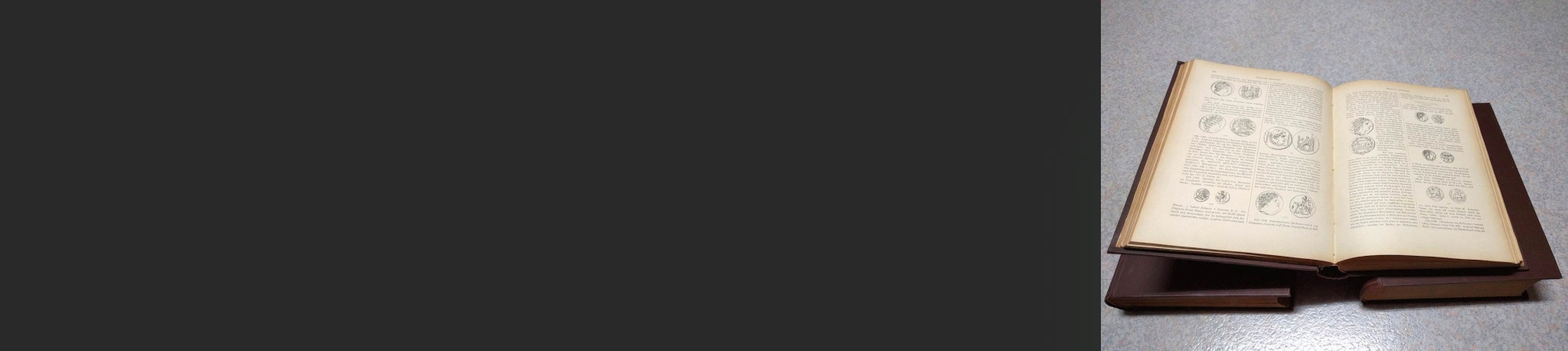
Folio. (VIII),243,(1 blank) p. Calf 32 cm (Ref: ESTC Citation No. R4123; Hoffmann 3,82; Ebert 16760 ‘Wurde verboten, weil man die Noten antichristlich fand’; Graesse 5,274) (Details: Back with 5 raised band. Blind tooled double fillet border on both boards. Title in red and black. Woodcut text illustration, which represents a diagram of the philosophic schools in antiquity) (Condition: Binding scuffed. Back rubbed. Joints weak, partly starting to split. Boards spotted. Paper browning and foxed. Endpapers worn and browning) (Note: Few books have over a long period of time aroused so much upheaval among Christians as this biography of the neopythagorean ascetic and wandering philosopher Apollonius of Tyana, written by the Greek sophist and rhetor Philostratus at the beginning of the 3rd century A.D. This is the first English translation of the first 2 books (of 8) of this Life of Apollinius of Tyana. The translation was speedily condemned and suppressed by the Church of England, because it was held to be a most dangerous attempt against the church. Only a few copies were sent abroad. Apollonius was born in the same year when Jesus Christ is supposed to be born. It is almost impossible to reveal Apollonius’ true identity, or to decide wether this is a biography of a real or fictionalized hero, or just an Heliodoran romance or a romantic hagiography, or even a documentary romance. The question can be dealt from so many angles, that the Philostratean studies constitute a separate branch in the research of the culture of the Early Roman Empire. The problem is ’that Philostratus, as a man of letters and sophist full of passion for Greek romance and for the studies in rhetoric, was hardly interested in the historical Apollonius’. (Dzielska,M., ‘Apollonius of Tyana in legend and history’, Rome 1986, p. 14) A fact is that contemporary sources reveal next to nothing about Apollonius. Philostratus wrote the biography at the behest of the empress Julia Domna Augusta. ‘To satisfy the empress’s demand, who asked him (Philostratus) to narrate the life and achievements of Apollonius, he had to invent this figure as it were anew. Thus using his literary imagination, this moderately gifted writer turned a modest Cappadocian mystic into an impressive figure, full of life, politically outstanding, and yet also preposterous’. (Idem, p. 14) Nothing proves that the ‘Vita Apollonii Tyanensis’ was widely read in the 3rd century. It would probably not have survived, were it not for the gouvernor of Bithynia, Sossianus Hierocles, one of the inspirators of the persecution of the Christians in 301 A.D. in his province under the emperor Diocletian. At the beginning of the 4th century he published his ‘Philaletes’, a treatise against Christianity, in which he ridiculed the divine attributes of Christ, and praised Apollonius’ virtues and thaumaturgic abilities. In the ‘Philaletes’ Hierocles propagated his pagan Christ Apollonius. The Christians were furiously enraged, because Hierocles dared to contrast Apollonius with their Saviour. The Christians won under Constantine, and the ‘Philaletes’ vanished soon from the face of earth. It is only known through the ‘Against Hierocles’, a treatise of the Churchfather Eusebius. The ‘Vita Apollonii Tyanensis’, in which it was believed that Apollonius was presented as the equal, if not the superior of Christ, survived however the burning of pagan literature by Christian mobs in early christianity. Translations of the ‘Vita’ which began to appear in the 16th century were immediately put under ecclesiastical ban. The English translation of 1680, by the leisured gentleman Charles Blount, 1654-1694, a deist and freethinking philosopher, and especially his notes, raised such an outcry among christian believers in England that the book was condemned by the Church of England in 1693, banned and its further publication forbidden. Hoffmann observes that the stock might have been burned (vielleicht verbrant). On what ground he thinks so, is not clear. Still, ‘fierce passions were let loose. Sermons, pamphlets and volumes descended upon the presumptuous Blount like fireballs and hailstones, and his adversaries did not rest until the authorities had forbidden him to print the remaining six book of his translation’. (R.W. Bernard, ‘Apollonius, the Nazarene’, 1956, p. 10) Blount persisted that if the miracles of Apollonius were untrue, so were those of Jesus. In his preface Blount is very cautious. He presents the ‘Life’ as being ‘no more than a bare narrative of the Life of a Philosopher, not of a new Messiah’. Philostratus never even mentions Christ, he says. ‘And if one Heathen Writer (Hierocles) did make an ill use of this History, by comparing Apollonius with Christ, what is that to Philostratus, who never meant nor design’d it so’. (Preface p. A2 verso) Blount had already finished the translation of all 8 books, he tells the reader, ‘when I found the Alarm was given in all parts what a Dangerous Book was coming out; (…) which might therefore prove of pernicious consequence of the Publick’. He fears for his life he says, and therefore publishes only the first 2 books. ‘I have thought fit to proroque the remaining part of this history’. (p. A3 verso) Especially Blount’s very elaborate illustrations and annotations to the text were considered to be dangerous atheist freethinking. A century later Blount’s notes were translated into French and published in Amsterdam in 1779. It was ironically dedicated to Pope Clement XIV by one ‘Philaletes’) (Collation: A-Z4, Aa-Gg4, H6) (Photographs on request) (Heavy book, may require extra shipping costs)

The two first books of Philostratus, concerning the life of Apollonius Tyaneus: written originally in Greek, and now published in English: together with philological notes upon each chapter. By Charles Blount, Gent.
€ 950,00
🔒 Safe & Secure Checkout


| Gewicht | 3000 g |
|---|---|
| Publisher | |
| SortedBy |
Gerelateerde producten
-
Rerum gestarum qui de XXXI supersunt, libri XVIII. Ope MSS. codicum emendati ab Henrico Valesio, & auctioribus adnotationibus illustrati. Necnon excerpta vetera de Gestis Constantini & Regum Italiae. Editio Posterior, cui Hadrianus Valesius, F. Lindenbrogii in eundem Historicum ampliores observationes, et collectanea variarum lectionum adjecit, … emendavit, notisque explicuit.
€ 750,00 -

D. Magni Ausonii Burdig. viri consularis opera. A Iosepho Scaligero, & Elia Vineto denuo recognita, disposita, & variorum notis illustrata (…) Adiectis variis & locupletissimis indicibus.
€ 920,00 -

Decii Ausonii Burdigalensis viri consularis varia opuscula dilegenter recognita.
€ 900,00 -

Joannis Alstorphii J.U.D. Dissertatio philologica De lectis. Subjicitur ejusdem De lecticis veterum diatribe.
€ 260,00 -

Sancti Athenagorae Atheniensis Philosophi Deprecationem (vulgo Legationem) pro Christianis. Edidit M. Io.Gottlieb Lindner, rector Scholae Arnstadiensis. (Bound with:) HERMIOU PHILOSOPHOU DIASURMOS TÔN EXÔ PHILOSOPHÔN. Hermiae Philosophi Gentilium Philosophorum Irrisio. Cum adnotationibus Hier. Wolfii, Thomae Galei, Wilh. Worthii suisque. Graece in usum praelectionum separatim edidit Jo. Christoph. Dommerich, dialect. et philosoph. primae professor P.O. in Academia Helmstadiensi.
€ 180,00 -

Torchilli Badenii Jac. fil. Roma Danica, harmoniam atque affinitatem linguae danicae cum lingua romana exhibens. Editio altera priore anni 1699 auctior et emendatior curante Torchillo Badenio pronepote.
€ 90,00 -
AISCHINOU TOU SÔKRATIKOU DIALOGOI TREIS. Aeschinis Socratici Dialogi tres. De novo recensuit, vertit, et animadversionibus suis auxit Petrus Horreus G.F. Accedunt ad calcem Fragmenta & Indices copiosi.
€ 260,00 -

ARISTOPHANOUS KÔMÔiDIAI iá. Aristophanis comoediae undecim, graece & latine, cum indice paroemiarum selectiorum, et emendationibus virorum doctorum praecipue Josephi Scaligeri. Accesserunt praetera Fragmenta ejusdem ineditarum comoediarum Aristophanis.
€ 430,00 -

ARISTOTELOUS ÊTHIKÔN NIKOMACHEIÔN biblia deka. Aristotelis De moribus ad Nicomachum libri decem. Ita Graecis interpretatione recenti cum Latinis coniunctis, ut ferme singula singulis respondeant: in eorum gratiam, qui Graeca cum Latinis comparare volunt.
€ 1.000,00 -
A collection of dissertations: 1, Petrus Nieuwland: Dissertatio philosophico-critica De Musonio Rufo philosopho stoico. (Praeside D. Wyttenbachio, 1783) (Bound with:) 2, B.P. Van Wesele Scholten: Dissertatio philosophico-critica De Philosophiae Ciceronianae loco, qui est De Divina Natura. (Praeside D. Wyttenbachio, 1783) (&:) 3, B.P. Van Wesele Scholten: Dissertatio juridica De foedere Madritano, quod Franciscus I. Rex cum Carolo V. Imp. captivus fecit. (Praeside H.C. Cras, 1784) (&:) 4, Benjamin Petrus van Wesele Scholten: Dissertatio juridica inauguralis, Ad fragmentum Scaevolae, quod exstat in Leg. CII Princ. Dig. de Solut. et Liberat. (Praeside D.G. van der Keessel, 1785) (&:) 5, David Jacobus Van Lennep: Disputatio juris, sive ethico-juridica De loco Ciceronis qui est De Finibus Bonorum et Malorum. (Praeside H.C. Cras, 1793) (&:) 6, E.C. d’Engelbronner: Disputatio juris De loco Ciceronis qui est De Legibus. (Praeside H.C. Cras, 1802) (&;) 7, Jo. Conr. d’Engelbronner: Disputatio Historico-critica De M. Tullio Tirone M.T. Ciceronis liberto. (Praeside D.J. van Lennep, 1804) (&:) 8, Eliae Caroli d’Engelbronner: Oratio de Stoicorum, doctrinae in primis moralis, prae Epicuraeorum ratione praestantia. Habita, in templo Sancti Martini, quod Majus dicitur, A.D. XI. Septembris ann. 1805 cum Gymnasii Bomeliensis rectionem auspicaretur.
€ 280,00